


Legal Management Software: The Foundation of Modern Legal Operations
The legal industry is experiencing a significance change in operation. With more rules, work become more complex, and client expectations rise, legal teams are under growing pressure to deliver faster outcomes with greater transparency and predictable costs. Traditional tools—emails, spreadsheets, shared drives, and manual processes—can no longer support the pace, scale, and accountability demanded of modern legal work.
As a result, legal management software has changed from a “nice-to-have” tool into a essential system for competitive legal organizations. In this blog, we explain what legal management software is, its main components, who needs it, how it impacts business performance, and why solutions like Lexzur Practice are redefining modern legal operations.
What Is Legal Management Software?
Legal management software is a centralized digital platform designed to manage, automate, and optimize legal work across its full lifecycle. Often called legal practice management system or legal operations software, it allows legal professionals to manage cases, matters, clients, documents, workflows, billing, and analytics within a single secure sustem.
Unlike general project management or document storage tools, legal management software is designed for the legal industry. It supports legal-specific needs such as data security , regulatory compliance, document tracking, audit trails, deadline tracking, and matter-based workflows.
At its core, legal management software serves as the single source of truth for legal teams—eliminating fragmented systems and enabling consistency, accountability, and operational clarity.
What are the components of a legal management system, and how do they function?
A strong legal management system is founded on a few key parts, even though different vendors offer different functionality.
Managing Cases and Matters
Any legal practice management system needs case and matter management to work. It allows users start, keep track of, and finish legal cases. Legal teams can give tasks, establish deadlines, plan meetings or hearings, attach files, and see how things are going in real time.
Legal management software keeps everyone on the same page throughout the life of a case by centralizing issue data. This makes sure that deadlines are met, responsibilities are clear, and everyone stays on the same page.
Legal CRM for managing clients and contacts
Legal CRM feature brings together all the information about clients and stakeholders, such as leads, clients, partners, opposing lawyers, and outside consultants. Each profile can hold searchable information, related cases, documents, messages, and financial records.
This kind of structure makes it easier for clients to get in touch with you, keeps your service going, and helps you manage your relationships, all of which are important for keeping clients and making them happy.
Automating Tasks and Workflows
Workflow automation lets legal teams standardize and automate REPETITIVE tasks, such starting a case, getting approvals, reviewing documents, and assigning tasks. Workflows that can be changed help avoid bottlenecks, cut down on unnecessary work, and lower the chance of making mistakes.
Legal operations software automates mundane tasks so that specialists can focus on strategic legal analysis instead of coordinating administrative tasks.
Keeping track of documents and records
A lot of papers are needed for legal work. Users can save, organize, search, and link documents directly to matters, cases, and contacts in a secure, centralized repository. Version control, audit logs, and permission-based access keep data safe and make sure that everyone respects the rules.
This gives you one technique to manage documents instead of several different ones.
Lawyers can use e-invoicing, billing, and time tracking.
With built-in billing modules, users may keep track of both billable and non-billable time, keep expenses down, and automatically make invoices based on rules that have already been specified. Clear billing makes it easier to be paid, reduces down on fights, and makes clients trust you more.
It’s highly vital for the financial health of both enterprises and legal departments to keep track of time and costs appropriately.
Dashboards, Reports, and Data Analysis
Advanced analytics take raw data and make it into usable information that can be used. You can see how your matters are going, how much work is being done, how well your finances are doing, and how well your firm is doing using custom dashboards and reports.
These insights assist legal leaders make informed, data-driven decisions and demonstrate the business that they are worth their time.

Who Needs Legal Management Software?
Everyone who works in the legal field can benefit from legal management software.
Law Firms
Legal practice management software helps legal firms of all sizes operate their companies more smoothly, work together better, and develop without having to hire more people to do the same things.
Legal Departments in Businesses
In-house legal teams use legal operations software to handle contracts, compliance, lawsuits, and outside lawyers while keeping costs down and making things clear for the rest of the organization.
Solo Practitioners
For single lawyers, legal management software combines sperate technologies into one platform. This saves time, decreases risk, and makes the process look more professional.
Legal Service Providers & Consultants
Alternative legal service providers and compliance consultants use these tools to handle a lot of cases swiftly and accurately.
What is the impact of legal management software on business performance?
Using legal management software leads to clear, measurable results.
Increased Productivity
Automation cuts down on the time lawyers spend on administrative work, allowing them to take on more cases without hiring more staff.
Cost Control & Predictability
Centralized billing, time tracking, and analytics provide you a better picture of your spending, which helps you make better budgets and plans for your money.
Better compliance and risk management
Built-in security, audit trails, and access restrictions help businesses stay within the law and lower their legal risk.
Making decisions based on data
Dashboards and reports help leaders find problems, plan ahead for workloads, and make the best use of resources.
Example of a Real-World Effect
A mid-sized law firm that handled over 400 ongoing cases set up a centralized legal management system that automated workflows. The company got to this point in six months:
- 25% reduction in matter turnaround time
- 30% less work for the administration
- Billing cycles that are 20% faster
- Improved audit readiness through centralized data access
How does Lexzur PRACTICE support both law firms and corporate legal departments?
Lexzur PRACTICE is a modern, customizable practice management system that helps law firms and corporate legal departments with all kinds of legal work.
Key features include:
- Management of cases and matters from start to finish
- Visual, customizable workflow automation
- Managing clients and contacts from one place
- Safe place to save documents with infinite space
- Tracking time, charging, and sending e-invoices
- Custom dashboards and detailed reports
- Deep connections with email, cloud storage, and tools for working together
- Support for multiple currencies and languages
- Standards for security that follow the GDPR
PRACTICE is a scalable legal operations software solution because it works with your workflows, not the other way around.
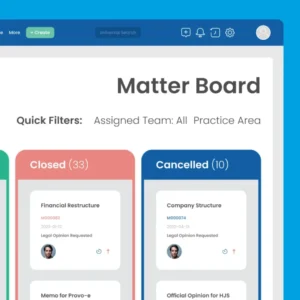
Clients Who Trust PRACTICE
Law firms, corporate legal departments, and legal service providers in many places trust Lexzur PRACTICE. Organizations select PRACTICE because it is flexible, reliable, and can handle complicated legal tasks while still being easy to use and having a high adoption rate.
For example, the law firm Abdulaziz Bin Ali & Partners in Saudi Arabia used PRACTICE to bring together its case management, time tracking, and billing systems. Before implementation, the company used a lot of different technologies that made it hard to keep track of things and send out proper bills.
After implementing Practice, the firm reported:
- A 30% cut in costs of running the business
- Better productivity thanks to integrated time and matter management
- More information about how the case is going and how the money is doing
This result shows that a modern legal management software platform may provide measurable operational benefit while also being easy to use and able to expand with a law practice.
How does PRACTICE compare with other legal management software solutions?
Not all legal management software is built the same.
Unlike systems that require paid custom development or external consultants, PRACTICE is configuration-first. Legal teams can tailor workflows, approvals, matter structures, and reporting internally—without code or ongoing customization costs.
Unlike tools limited to billing or document management, PRACTICE delivers a fully integrated legal operations software environment. Cases, clients, documents, workflows, billing, and analytics operate within one synchronized system.
Many legacy platforms rely on rigid templates that force teams to adapt their processes. PRACTICE supports multi-track matters, parallel workflows, and role-based automation—making it suitable for litigation, corporate legal work, and compliance alike.
System Requirements & Implementation
There is no need for complicated infrastructure for PRACTICE because it is cloud-based. Most of the time, the requirements are:
- Access to the Internet
- Modern web browser
- Set up user roles and workflows
Most companies can go online in a few weeks with guided onboarding, training materials, and live assistance.
Book a demo to see our legal practice management solution in action
Frequently Asked Questions About Legal Management Software
The ideal legal management software for your business will rely on how big, complicated, and operationally demanding it is. Practice is a modern legal practice management system that is flexible, automated, and scalable, unlike older solutions that have problems.
By automating repetitive processes, centralizing documents and communications, and standardizing procedures, legal management software makes lawyers’ job more efficient so they can focus on more important legal work.
No. Legal operations software is useful for solo practitioners, small firms, and big companies’ legal departments.
Most cloud-based legal practice management systems can be set up in a few weeks, but this depends on how hard it is to move data and set up workflows.
The law is getting more complicated but handling it doesn’t have to be. The best legal management software makes everything about legal work clearer, more manageable, and more efficient.
Now is the moment to go forward if you want a law practice management system that is adaptable, safe, and can grow with your business.
👉 Get a free trial of Lexzur PRACTICE



Leave a comment